Excursión a Original Ronda

Special Excursions

Original Ronda

The dream village of Ronda

Included

Transport Transport
Tour guide Tour guide
Tickests Entradas a Plaza de Toros, Casa de Don Bosco e Iglesia de Santa María la Mayor

Further information regarding the excursion

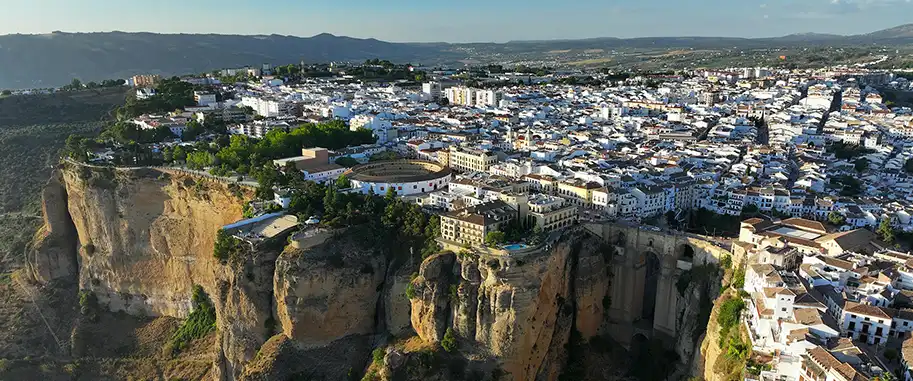
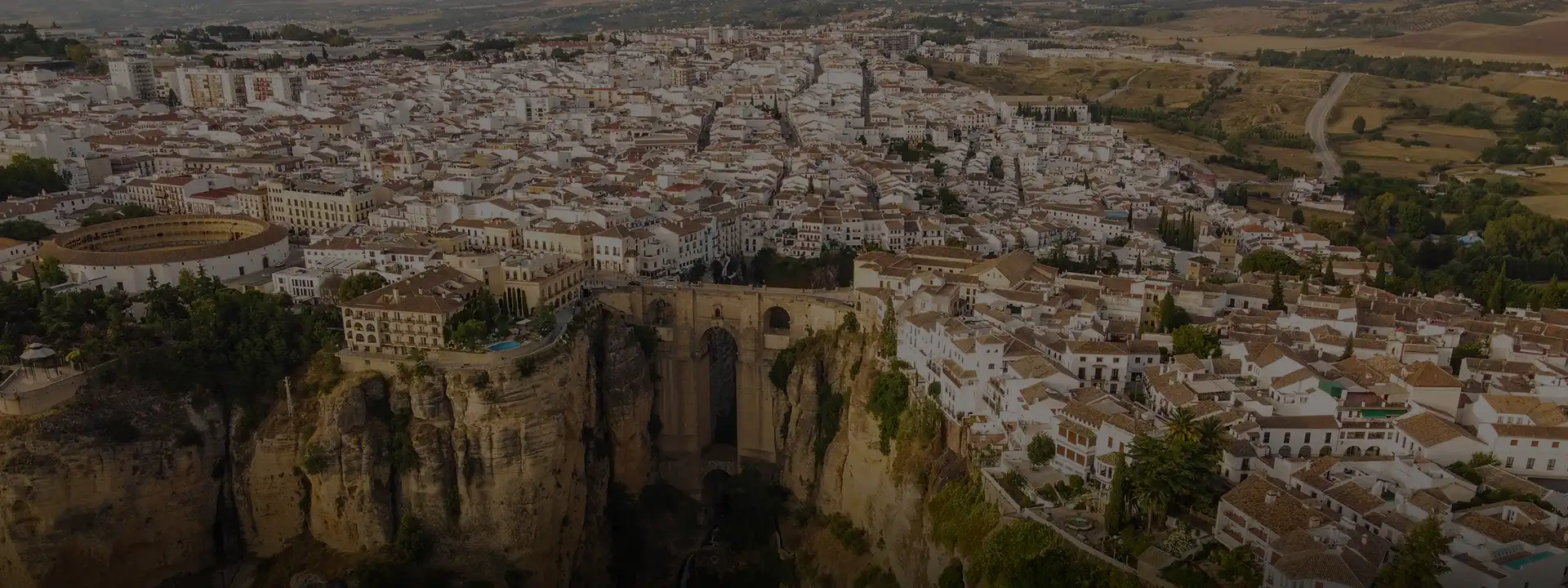
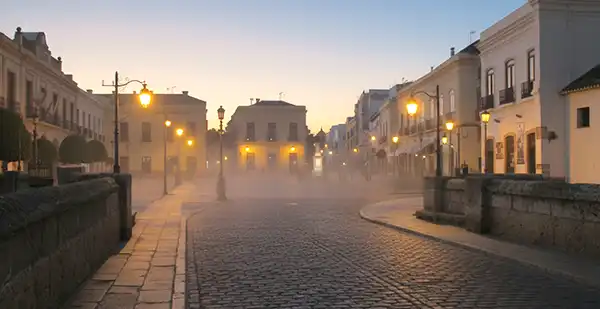
The beauty of Ronda lies in the contrast between nature and its architecture, situated 730 meters above sea level. You will feel the harmony of its streets just as romantic travelers like Rainer, Orson Welles, and Ernest Hemingway experienced.

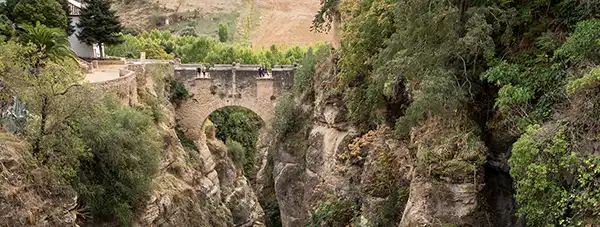
We will visit the old Muslim town and the 18th-century Puente Nuevo (New Bridge) over the Tajo River. During the visit, you can explore the Arab Baths, the Church of Santa María la Mayor, and the Casa de Don Bosco (Don Bosco House). At the end of the tour, you will have two hours of free time.

Ronda
Ronda
Ronda
Ronda
Ronda

Route

Activity
WC
Duration
From Costa del Sol to Ronda
  • Customer pick-up and departure to Ronda.
No
1 h 30 min
Walking tour of the city center
  • Bullring.
  • New Bridge.
Yes
1 h
View of the first part of the old town.
  • Arab Baths (not included).
  • Salvatierra Palace.
  • Old Bridge.
(in bars)
45 min
Santa Maria la Mayor Collegiate Church.
  • Visit to the main church.
(in bars)
30 min
View of the second part of the old town.
  • Mondragon Palace (exterior).
  • Don Bosco House (interior).
(En bares y en Casa de Don Bosco)
45 min
Free time
  • Time for lunch or strolling.
Yes
2 h
From Ronda to Costa del Sol
  • Return to the point of origin.
No
1 h 30 min


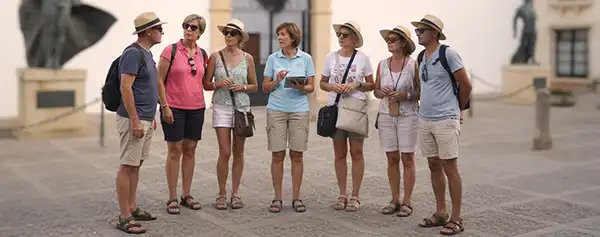
Turistas disfrutando de Ronda

Book now

The beauty of Ronda awaits you, let yourself be seduced by its landscapes, its bridge, and its history.

Booking Now

Itinerary

1. Bullring

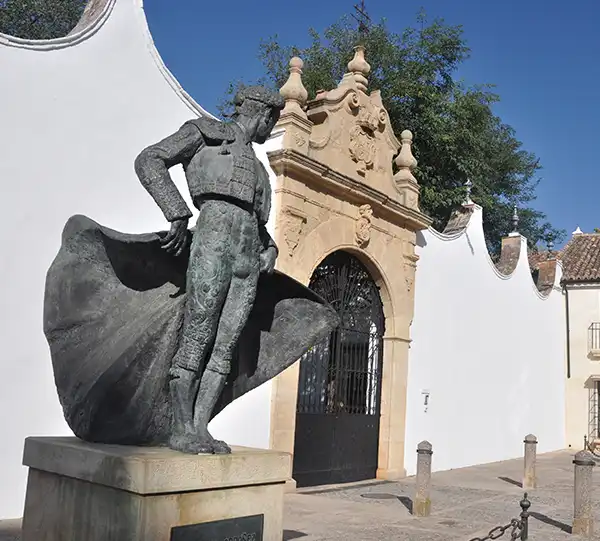
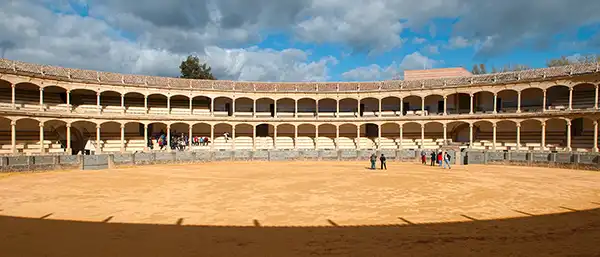
We will take a guided walking tour of Ronda, crossing the Alameda Gardens and enjoying views of the mountains, the gorge, and the meadows until reaching the Bullring. Considered the cradle of bullfighting, this ring was inaugurated in 1785 and is one of the oldest and most beautiful in Spain.

It stands out for being built entirely of sandstone and for its key role in modern bullfighting, promoted by the historic Romero dynasty. Its beauty has captivated figures such as Orson Welles and Ernest Hemingway, contributing to its international projection.
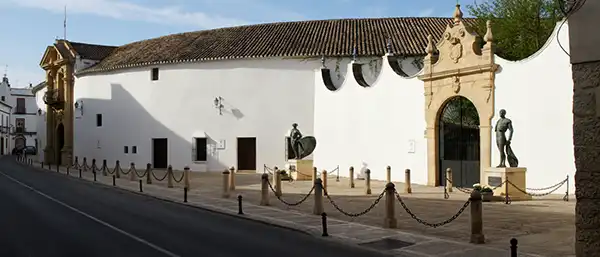
Bullring Bullring
Bullring

2. New Bridge

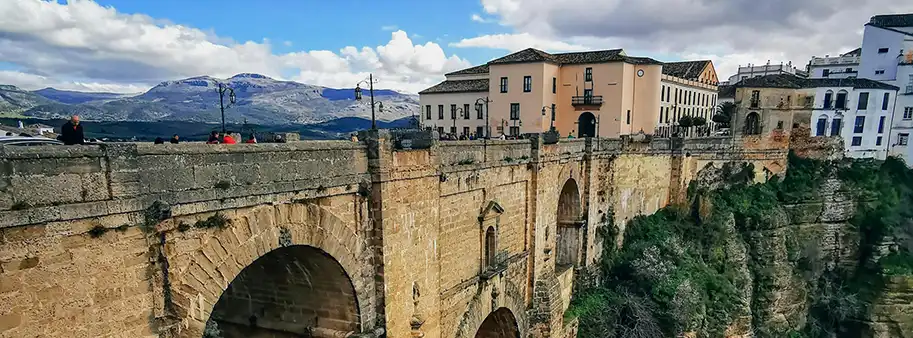
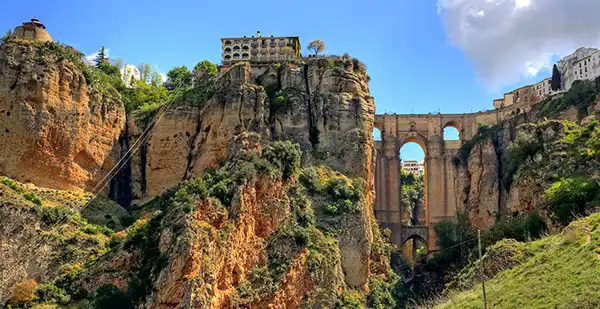
To reach Ronda on our trip, we will have crossed its spectacular natural reserve of the Sierra de las Nieves National Park and the Serranía de Ronda, ascending through the mountain range until reaching 1,065 meters above sea level. After visiting the Bullring, we will complement those impressive views with a visit to the New Bridge that rises over the El Tajo gorge.

Built between 1751 and 1793, this imposing engineering work took more than 40 years to complete. It joins the two parts of the city: the modern area (el Mercadillo) with the old town (la Ciudad), spanning a gorge nearly 100 meters deep carved by the Guadalevín river.

New Bridge

3. Arab Baths

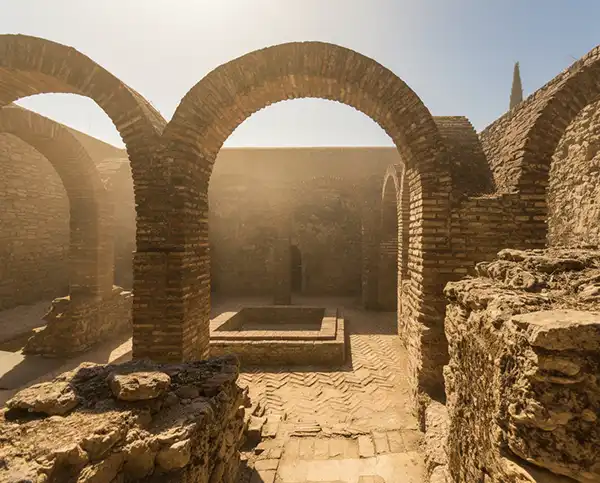
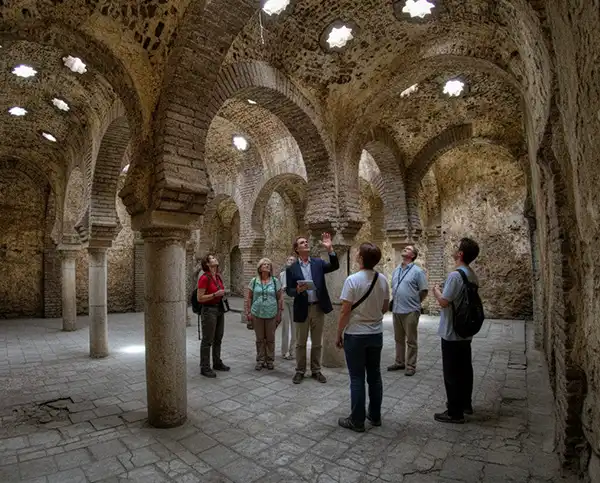
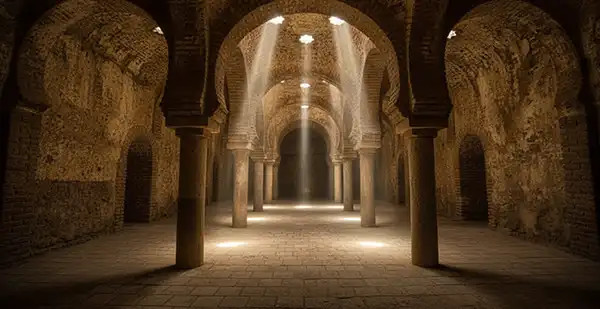
They are considered the best-preserved in the entire Iberian Peninsula. They were built between the 13th and 14th centuries (Nasrid period) and are located in the city's old suburb (the current San Miguel neighborhood).

They were built at the entrance to the city so that travelers could purify themselves before crossing the walls.

What impresses most when visiting them are their star-shaped vaults: ceilings with star-shaped skylights; their water wheel system to draw water from the Guadalevín river and distribute it throughout the premises; as well as the three rooms: cold, warm, and hot water.

Arab Baths
Arab Baths

4. Salvatierra Palace

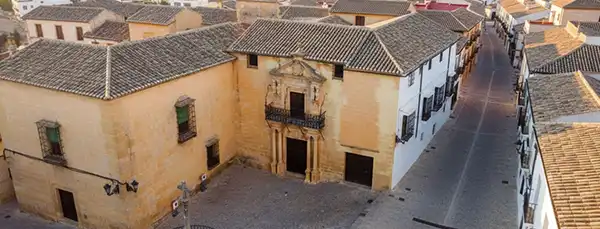
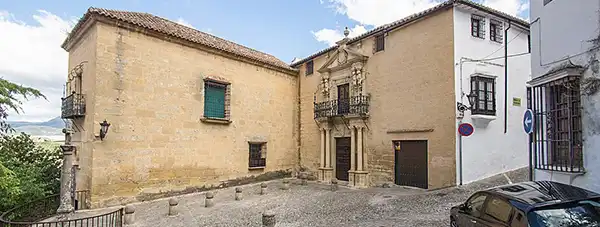
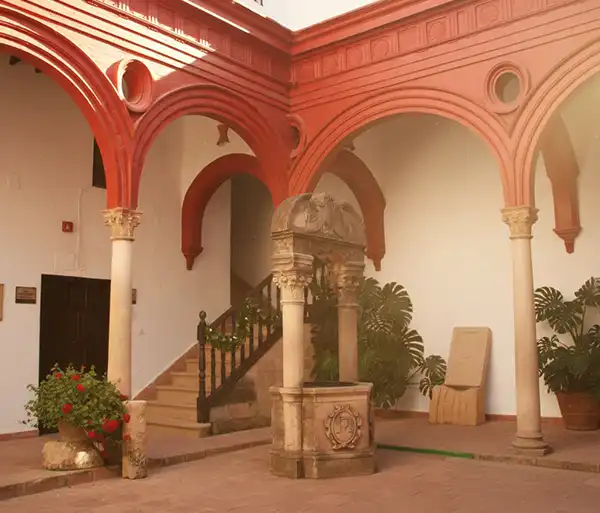
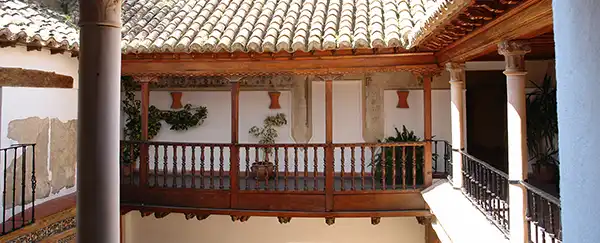
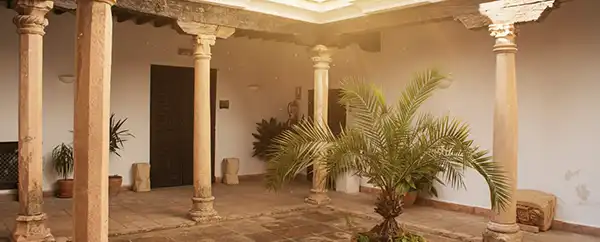
This stately complex arises from the masterful integration of several Mudejar houses, known as the former "Painted Houses," which were unified and expanded to form their current appearance. The complex is articulated around a rectangular central cloister, presided over by eleven slender Tuscan columns that support the galleries. Access to the noble floor is through an imposing imperial staircase.

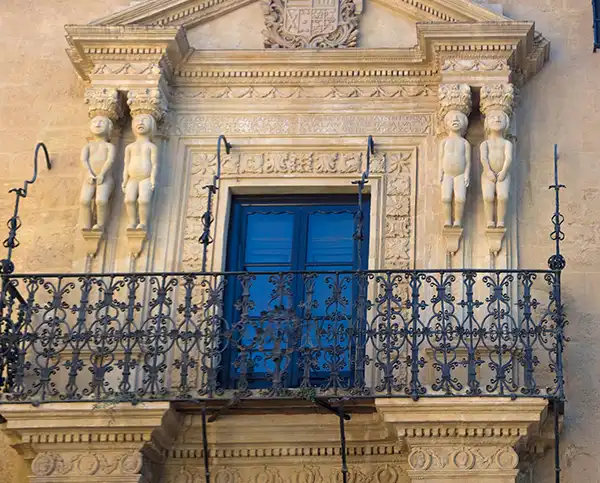
The sandstone facade shows one of the most unique Baroque portals in the region. Towards the slope, the palace opens onto a spectacular garden, with carefully arranged hedges and rose bushes, where a Spanish fir stands out, an emblematic fir of the Serranía de Ronda.

Salvatierra Palace Salvatierra Palace
Salvatierra Palace

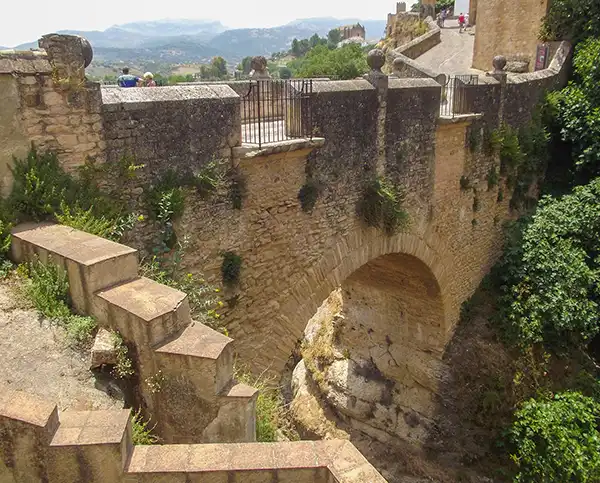
5. Old Bridge

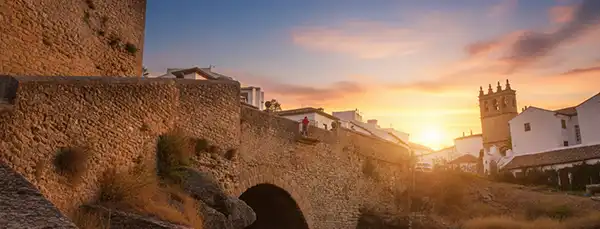
If the New Bridge impresses with its height, the Old Bridge fascinates with its character and strategic location. Until the construction of the great viaduct in the 18th century, this bridge was the main entrance to the city from the Mercadillo neighborhood.

Although the bridge's current appearance dates from a 1616 reconstruction (after being destroyed by a major flood), its foundations and origin are much older, dating back to Ronda's Arab era.

Old Bridge Old Bridge
Old Bridge

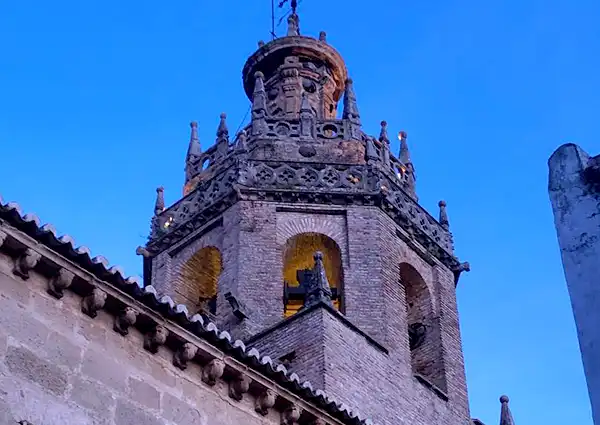
6. Santa Maria la Mayor Collegiate Church

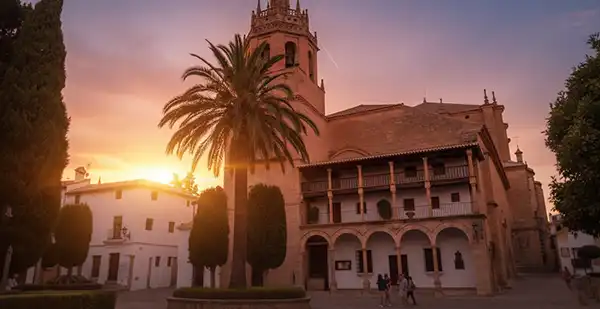
Located in the emblematic Town Square, the Santa Maria la Mayor Collegiate Church stands over what was once the former Main Mosque of Muslim Ronda.

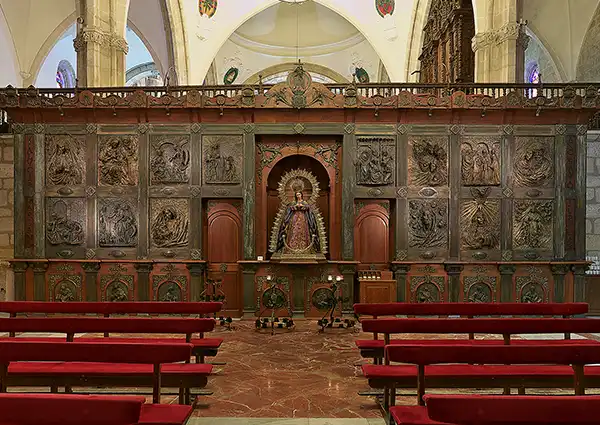
After the Reconquest in 1485, the Catholic Monarchs ordered its transformation into a Christian temple, leading to a unique architectural blend that took more than 200 years to complete. Inside, remains of the old mosque are still preserved, such as part of the qibla wall and a horseshoe arch with stucco decoration. The Baroque Altarpiece of the Mayor Dolor stands out, a masterpiece that dominates the space with its drama and detail.

Santa Maria la Mayor Collegiate Church

7. Mondragón Palace (exterior)

Also known as the Palace of the Marquis of Villasierra, it is possibly the most important civil monument in Ronda. It was the residence of King Abbel Malik, son of the Sultan of Morocco, before becoming the home of Christian governors after the Reconquest.

It reflects a historical duality where Andalusian refinement blends with the sobriety of the Renaissance.

Mondragón Palace (exterior)
Mondragón Palace (exterior) Mondragón Palace (exterior)

8. Don Bosco House (interior)

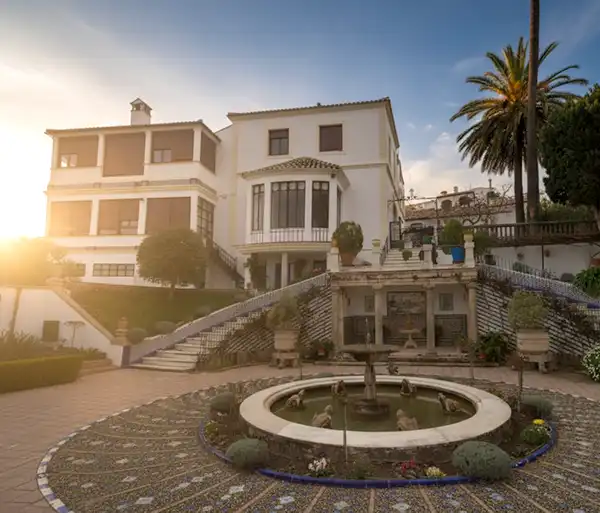
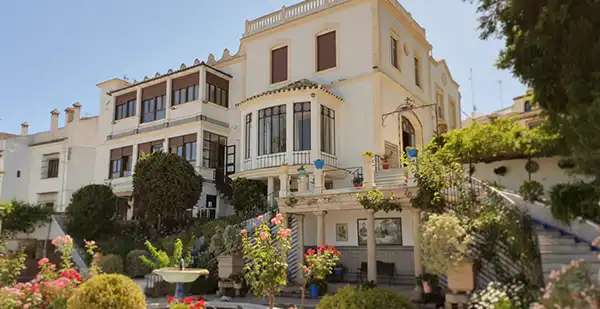
A modernist small palace from the early 20th century, donated to the Salesian Congregation as a resting place. Noted for its regionalist-style tiled patio with geometric and floral motifs.

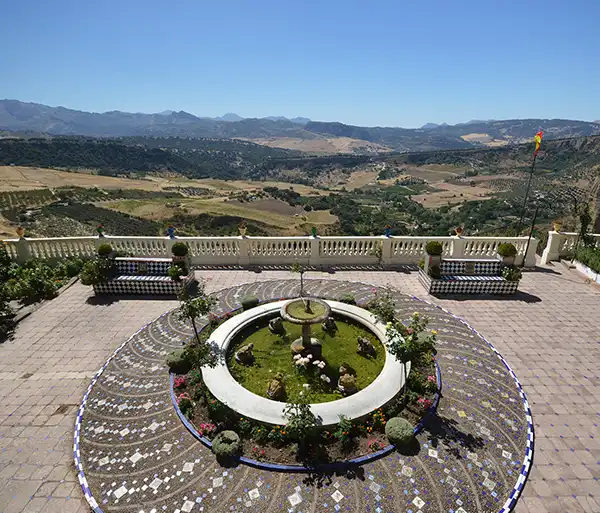
It houses wood crafts and carved furniture. Its greatest attraction is the "Jardín del Abismo" (Abyss Garden), hanging over the Tajo de Ronda, with spectacular views of the New Bridge and the Sierra de Grazalema.

Don Bosco House (interior)

9. Free time

The reference point is Espinel Street, known as "La Bola". It is a lively pedestrian street where you can find typical sweets, ceramics, ironwork, or leather crafts.

Free time

Recommendation

Comfortable footwear

Comfortable footwear

Use shoes that have been previously broken in. You will spend hours walking on cobblestones in the historic center and a lot of time standing in museum rooms.

Lightweight backpack

Lightweight backpack

Carry only the essentials (water, power bank, mobile, wallet). Many museums prohibit or require large bags to be left in lockers.

Layered clothing

Layered clothing

Bring a light jacket or shawl to adapt to temperature changes: museums with air conditioning or heating and areas with sun-shade contrast.

Key documentation

Key documentation

Carry identification (ID card or passport). Keep it in a safe but accessible place during the excursion.

Meeting point and schedule

Meeting point and schedule

Always confirm the time and place of the next meeting with your guide, especially before free time.

Offline map

Offline map

Download the area map to your mobile (e.g., Google Maps) so you can find your way without depending on data coverage.